Lawrence Whiffin (1930-2012) : Represented Artist
|
|
Random Audio Sample: Cat pieces (solo piano) by Lawrence Whiffin, from the CD Piano games |
- Browse works by Lawrence Whiffin
- Browse recordings available to purchase featuring music by Lawrence Whiffin
- Browse articles by and about Lawrence Whiffin
- Browse events featuring music by Lawrence Whiffin
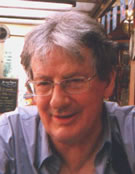
Lawrence Whiffin was born in Melbourne in 1930, but spent much of his life in Europe. He competed successfully for a scholarship to study piano with Roy Shepherd at the Melbourne Conservatorium in 1947, won the Lady Turner prize in first year and graduated with Dip.Mus. (Honours) in piano and composition in 1950. He then went to Paris where he studied piano with Blanche Bascourret at the École Normale de Musique. His studies were interrupted by a two-year engagement as pianist with the Ballet de l'Europe touring England after which he returned to Paris, obtaining his 5ème degré libre at the Ecole Normale in 1956.
In 1957 he was accepted as a student by the well-known Schoenberg scholar residing in Paris, René Leibowitz. Aware of the pianistic ability of the younger musician, Leibowitz employed him as repetiteur for his opera recordings. He also included Whiffin as a student in his conducting classes, which was to stand him in good stead in his forthcoming work in Italy. During this time he was employed as pianist for the recording of Michel Puig's Stigmates, a protest work against the war between France and Algeria. He also joined a group of musicians dedicated to the performance of 20th century music under the direction of Diego Masson.
1960 and 1961 saw Whiffin touring France as pianist for Richard Martell, an American operatic tenor, followed by a period of nine years working as orchestral arranger, principally for RCA in Rome. His arranging and conducting skills took him to the Buenos Aires Carnival in Argentina and to RCA's pop music festival in Sitges, Spain. He became well-known in musical circles through his successes as arranger for some of Italy's topline singers (Bruno Filippini, Nico Fidenco, Ricky Gianco) and also international artists recording in Italy (Paul Anka, Jose Feliciano, Sylvie Wartan, Dalida). Whiffin also worked with Ennio Morricone who was then at the early stages of his successful career as a composer for Spaghetti Westerns.
At this time Whiffin combined his work in the commercial world with his interest in serious concert music. In 1962, in the middle of his arranging activities in Rome, he was engaged as speaker in Schoenberg's The Ode to Napoleon, performed in Milan under the baton of his mentor, René Leibowitz. He also wrote incidental music for two LP records for RCA.
In 1970, tired of the superficiality of the pop world, Whiffin returned to Paris where he was appointed sound effects man by the film company, Pathé Cínéma, providing background music for news reels and documentaries, and writing music for, among others, a documentary on the life of the French author and daring vaudeville star, Colette, and for the feature film L'An 01. He again joined Diego Masson's group in performances of works by Ligeti, Berio, Globokar and Michel Puig, including the latter's operatic adaptation in French of Lewis Carroll's The Hunting of the Snark, performed during the Avignon Festival in 1972 and for two weeks in Paris over the following Christmas/New Year period.
In 1976, despite the prospect of further work in France, Whiffin decided to return to Australia following an invitation by Keith Humble, founding professor of the Music Department at Melbourne's La Trobe University, to take up a teaching post in the department. His position at La Trobe entailed lecturing in theory and composition whilst providing performance possibilities for his own music. He received commissions from various music organisations for original works whilst simultaenously continuing his career as pianist promoting contemporary music.
Back in Australia, Whiffin also initiated a series of publications titled Contemporary Australian, (piano, violin, flute) and, in 1987, produced a text on counterpoint intended for use by impoverished music students. In 1988 he was appointed chairperson of the music department at La Trobe, a post he occupied for several years on different occasions until his retirement in 1995.
Since his retirement, Whiffin's composition took on a new lease of life: in 1998 his setting for nine instruments and narrator of the poem, Murchitt: a daydream, by the poet and playwright William Henderson, won the Australia Music Centre award for the Best Australian Composition of the Year. In 2002 his Concerto for violin and five instruments, performed in Melbourne the previous year, won the Albert Maggs award. The commission resulting from that award, a five-movement suite Fiesta for recorder, clarinet, bassoon and chamber organ, received its premiere in Melbourne in October 2004.
Lawrence Whiffin passed away on 18 November 2012.
Awards & Prizes
| Year | Award | Placing | Awarded for |
|---|---|---|---|
| 2002 | Albert H Maggs Composition Award | First Prize | Concerto for violin and five instruments |
| 1999 | Classical Music Awards - Best Composition by an Australian Composer | Winner | Murchitt |
Selected Commissions
| Work | Commission Details | |
|---|---|---|

|
Fiesta (quartets: clarinet, recorder, bassoon, keyboard) (2004) | Commissioned by University of Melbourne Faculty of Music for the Albert Maggs Award. |
|
|
Concerto for violin and five instruments : for solo violin and five instruments (1999) | Commissioned by Astra Chamber Music Society. |
|
|
Cycles-4 (quartets: clarinet, trombone, percussion, piano) (1998) | Commissioned by Southbank Contemporary Music Ensemble. |
|
|
The serious clown (solo piano) (1996) | Commissioned by Sally Mays. |
|
|
Red letter days : Cycles 6-a (1988) | Commissioned by Simone De Haan for performance by Pipeline. |
|
|
Suite Colette : for piano four hands (1988) | The composer wishes to thank La Trobe University for financial support and the use of its computer facilities. |