12 August 2026
Beyond a Bio: Gina Ismene Chitty
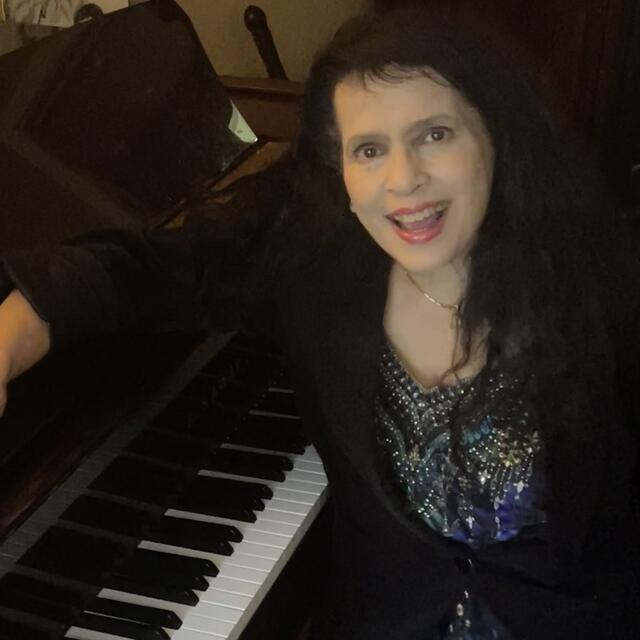 Image: Gina Ismene Chitty
 © Photo supplied
Gina Ismene
Chitty is an Australian composer,
author, artist and pianist who blends
classical precision with multicultural influences and jazz
rhythms. Her unique, rhythmically complex compositions are
regularly performed and published.
Performance venues
include Florianka
Recital
Hall, Krzysztof Penderecki Hall, Krzysztof Penderecki Academy
of Music, Verbrugghen
Hall, Sydney
Conservatorium, Richard Jacoby Saal, Hochschule fur Music,
Hannover, Germany. Gina had two world
premieres and one Australian premiere of her music at the
Sydney International Piano Competition in 2023. She received
a world premiere at the 10th
Anniversary
Duettisimo
Festival in
Krakow and will also receive another
world premiere at the Hand in Hand with Chopin festival which
is a dedicated youth talent event held in Poland during the
renowned International Chopin Piano festival.
Gina recently shared her insights and creative process with
us for this edition of Beyond a Bio.
How do
you describe your music to someone hearing it for the first
time?
To describe my music to
someone hearing it for the first time would be a little
difficult as I write so many works
which are so different from each
other. My works incorporate
influences of diverse genres, styles, blends of exotic Arabian
and Spanish influences,
lively Brazilian rhythms, intricate Baroque elements, and
fusions of Classical and Jazz
genres. If there is a common
thread running through my music, it is perhaps the
balance
between
classical craftsmanship and contemporary imagination. My works
tend to retain
a sense of
structural clarity and precision while embracing modernist
ideas, unexpected stylistic
juxtapositions
and a spirit
of exploration.
How does
a new work begin for
you?
Shortly before I set
about writing a piece, fragmented strands of
harmonic sequences and melodies form in my mind,
eventually creating a mounting and
irresistible euphoria. Sometimes it is a
languorous and intoxicatingly 'scented' euphoria.
I long to
write works of great emotional depth that shift towards a
higher
register. I may feel the buzz of
Rachmaninoff, Chopin, Stravinsky, Prokofiev, Kapustin
coursing through my veins as it
were, but eventually I end up writing lighter and more
humorous music and not exactly
what I set about to compose initially. I then begin to
absolutely love what I am composing, with each phrase leading
to another -
each with its
own new invigorating and rejuvenating energy and
life, far distanced from
what I
originally intended to compose.
The next thing I look forward to, is sketching the illustration for the cover of the future publication. I have an extensive collection of works published by Wirripang. Each of these publications contain my cover illustrations - mostly colourful caricatures of the characters I write about, such as "extraordinarily imperious" men in hats, Zumba dancers, Grimmolows, as well as the "recklessly impetuous" and adventurous duos that feature in my lively duets.
What
ideas or sounds are inspiring you right
now?
I begin to compose with a
mindset of the inspiration of
isolation,
inspired
by perhaps a
walk alone in
the forest, something I do quite
regularly. I would like to
leverage
exact timbres
in my mind that mimic natural sounds and
rhythms, such as the sonic
patterns of the wind sifting through the
leaves. The sounds that form the
foundational micro-rhythms of music, the silences
and
spaces between sounds.
Sometimes I may want to
write about the sounds of the gently undulating sea
waves touching the
shore. But what
actually happens when I sit down to
write? I often find myself
dabbling with applications of complex
polyrhythmic structures blending in with Afro-Brazilian
or Western classical or
jazz rhythms and
instrumentation.
In a nutshell, I sit down to write about leaves, petals and birdsong but end up contemplating cross-pollinations of highly energetic, multidimensional musical textures. Occasionally those impulses find a middle ground, resulting in more reflective works such as my piano duets The Island Dancer and Lazy Sway at Coogee Beach.
Can you
tell us about a recent project or
work?
My most recent
project, one that I have now completed
is a new work for two pianos and string orchestra,
commissioned by the Artistic Director of the
Duettissimo Festival in
Kraków and
the Head of the Chamber Music Department at the Krzysztof
Penderecki Academy of Music.
The work is a
three-movement exploration of sensations that are at once
ethereal, surreal
and
physical. It will receive its world
premiere at the Duettissimo
Festival by
the Chopin Duo, one of Poland's leading piano
ensembles with an active international concert career.
The
opportunity to write for such outstanding artists has been both
exciting and deeply rewarding, and I look
forward to hearing the work come to life in performance.
What do
you hope listeners experience in your
music?
That depends very much on
the piece. With my humorous works
and musical character pieces - such as
The Extraordinarily Imperious Man in a Hat,
Baroque Bear's Happy
Day,
Three Jazz Preludes and The Baby
Grimmolow's
First
Dancing
Lesson - I hope
listeners smile and enjoy the playful theatricality of the
music.
In my Brazilian-inspired dances, I aim to create a sense of
joy, vitality
and
exuberance. I want audiences to feel
energised by the rhythmic drive and infectious spirit of the
music. In my more reflective works,
such as The Island Dancer or Lazy Sway at Coogee
Beach, I hope listeners experience
a sense of calm, warmth
and gentle
contemplation. More virtuosic works
like The Dance of the Robotic
Cyborg require
displays of
exceptional technical skill and artistry. These works would appeal
to performers with a level of execution that is highly
advanced,
possibly
to international level
competition candidates.
Ultimately, I
hope each
work offers its own distinct emotional
journey.
If you were to name one Australian work everyone should hear,
what should it be?
It is difficult to choose just one, but
Roy Agnew's Sonata Fantasie (1927) would
certainly be among my
recommendations. It is an extraordinary work -
atmospheric, imaginative
and
pianistically brilliant. Agnew was not only a
gifted composer but also a remarkable pianist, and hearing
the work performed by its
composer offers a fascinating insight into Australian
musical history.
What
excites you about Australian art music right
now?
What excites me most is
the richness and diversity of voices contributing to
Australian art music today.
Contemporary
Australian composers have created a repertoire that is
distinctive, adventurous
and deeply
reflective of the nation's cultural landscape.
I admire the
way many composers draw upon environmental, social
and
personal narratives while engaging
with intercultural collaborations and genre-crossing
practices. Particularly
inspiring are
works that bring together Western classical traditions with
First Nations perspectives,
Asian musical influences
and
experimental approaches to sound. The result is a
repertoire that is both uniquely Australian and internationally
relevant.
What are
the works you most enjoy
writing?
I absolutely love
composing piano duets, particularly high-energy works written
for virtuosic duos.
Pieces such
as The Two Sassy Girls from Rio, The Two Rockin' Girls from Brazil,
Two Brazilian Dances - Piano Duets and Festa Na Avenida on Samba Rock
Island draw on samba rhythms,
improvisatory gestures, neo-swing influences
and
bebop-inspired energy.
They demand
technical agility, rhythmic precision
and a highly
articulated touch
in order
to capture the buoyancy and
exuberance of the music. I enjoy writing these
works because they allow me to explore the driving force
of Brazilian rhythms while
creating an engaging musical dialogue between
performers.
In 2025, some of these works were performed at the Krzysztof Penderecki Academy of Music by four exceptionally talented pianists. Earlier this year, The Impetuously Reckless Duo from São Paulo received its world premiere at the 10th International Duettissimo Festival in Kraków, where it was warmly received by audiences.
What's next for
you?
I see my compositional
path as an evolving one, and at present I am embracing a
wu
wei
approach - allowing ideas
to develop naturally and reveal their own direction.
Following the
completion of my work for two pianos and string orchestra, I
find myself increasingly drawn
towards a new project that revisits themes from an earlier song
cycle for voice, piano and
marimba, The Songs of the Bionic
Girl. That cycle centres on
Neo-Tatiana, a bionic being from the year 2099 endowed
with extraordinary
intellectual capacities and conditioned reflexes.
In the new work, I am interested in exploring a different aspect of her character: her capacity for emotion, perception and physical sensation, particularly through touch. The project is still taking shape, but I am excited by the questions it raises about humanity, consciousness and feeling.
I am also looking forward to the world premiere of my new piano duet Boogie Bossa on the Rock, which will be performed this August as part of the Polish concert series Pod rękę z Chopinem ("Hand in Hand with Chopin"), presented in association with the renowned International Chopin Piano Festival.
© Australian Music Centre (2026) — Permission must be obtained from the AMC if you wish to reproduce this article either online or in print.
Subjects discussed by this article:
- Gina Ismene Chitty (Interviewee)
Beyond a Bio is the AMC's interview series shining a spotlight on composers and creators, giving audiences an insight into their creative process, current work and the art music community in general.



Comments
Be the first to share add your thoughts and opinions in response to this article.
You must login to post a comment.