28 October 2026
Holding It in Common: AMC at PUENTE, Santiago
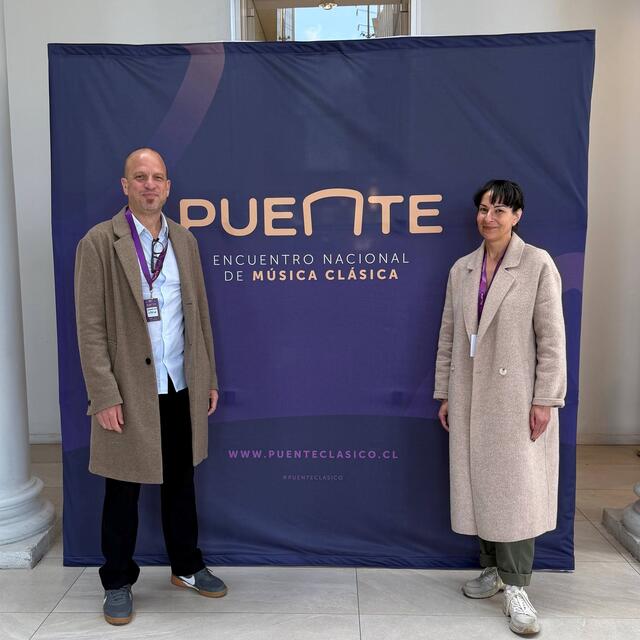 Image: Francisco Varela (RIOS) and Catherine Haridy
This month I spent a week in Santiago at PUENTE, Chile's first national gathering for the classical music sector. PUENTE, which translates in English to "the Bridge", was organised by Chile Clásico, FOJI (the Chilean youth orchestra network) and the Orquesta de Cámara de Valdivia. Through my Board role with the wonderful community of IAMIC the International Association of Music Centres, I was invited to speak at this auspicious gathering, funded through Chile's National Music Promotion Fund. This gathering was grounded in research from ANIMUPA, the Chilean Research Centre that has spent the past couple of years working to assess what the country's classical music sector (at large) actually needs to bring it together in a more cohesive structure.
I was honoured to be one of two international guests invited to deliver a keynote speech. It was an opportunity to share information about the AMC and our work over the last fifty years in the Australian community, and I was deeply moved by the energy and enthusiasm for our very unique and brilliant organisation. It was a timely reminder of how critical the AMC's work is in the art music community and how revered it is by others globally.
On the first afternoon I gave a talk called "Support models for creation and publishing from a sector-wide perspective: the Australian case", which was the AMC's fifty-year story told plainly. How we started in 1974 with five signatories and a government grant and how we navigated two funding crises in the 80's and again in the early 2010's. I talked about where our income comes from now, how our collection and commercial services actually work for our composers and creators, and the shape of where we're heading next.
In this room, I was struck by how familiar our story sounded to people who had never heard it before. The questions afterwards were about structure, continuity, and who is responsible for holding a sector together when no single organisation, artist or funding round can do it alone. Chile is asking the same question the AMC's founders asked in 1974, with one real advantage we didn't have: ANIMUPA has already produced a genuine picture of the sector, naming its tensions and its strengths in more detail than we had access to at our own beginning.
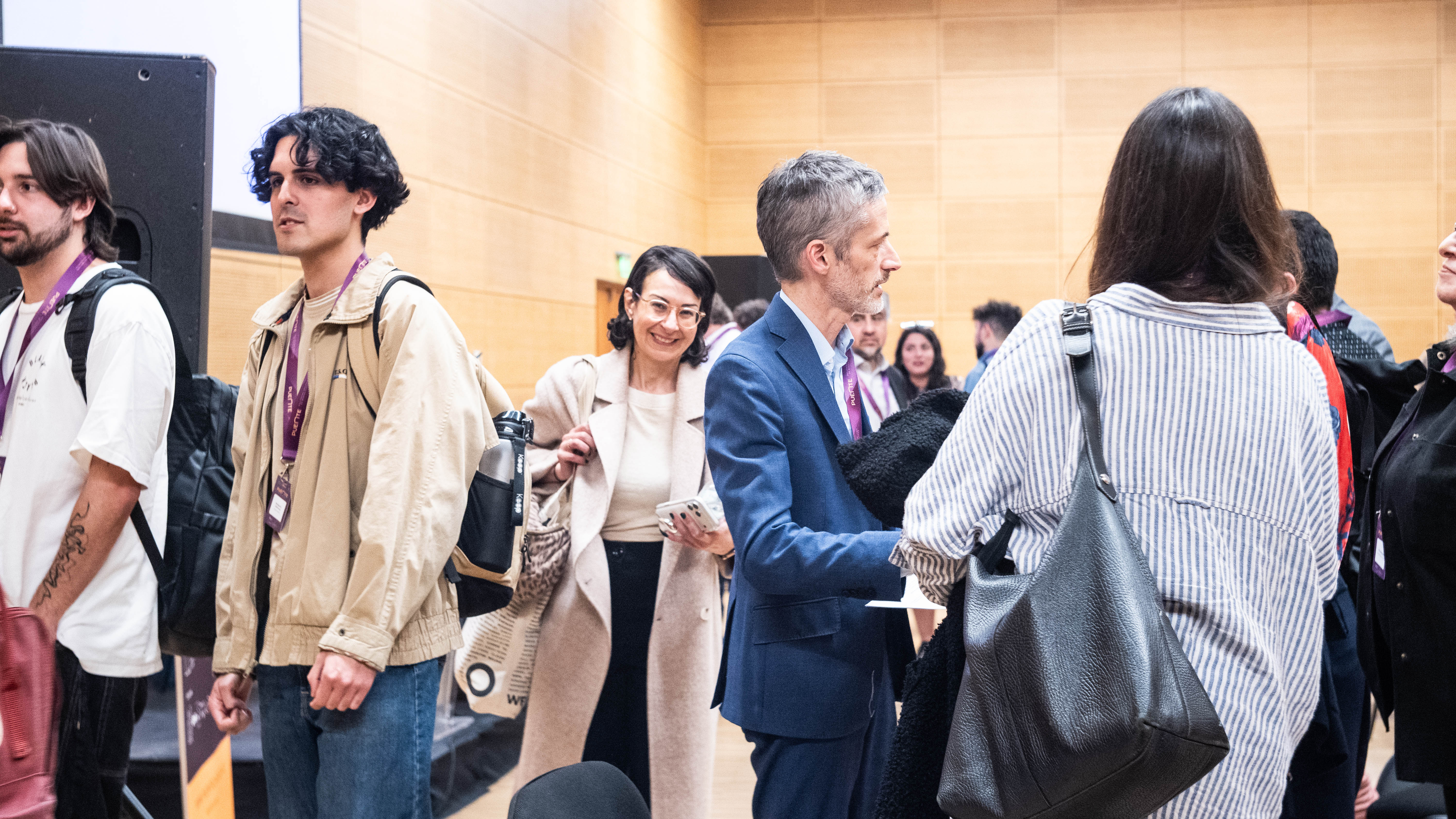
The second day put that question into practice. I joined Francisco Varela from the Ibero-American Network of Symphony Orchestras and Francisca Sandoval, General Manager of the Chilean Independant Music Association on a panel about moving from informal networking to formal governance and why this can be important from an advocacy perspective; the work of turning goodwill in the community into something durable enough to survive. It's the part of sector building that rarely gets discussed at conferences, and it was the part the room really leaned into over the three conference days.
Across the workshops and roundtables, there were discussions on career pathways, funding models highlighting commissioning, employability and audiences, and the concerns composers and performers raised in Chile sat very close to the ones I hear in our community. Distance came up constantly. Chile is a long, narrow country, and a creator working outside Santiago faces much the same isolation from opportunity, mentorship and audiences as a composer in regional Australia faces from our big cities. It was a reminder that the tyranny of distance isn't uniquely Australian. It's what happens in any country where a sector's infrastructure is focused on cities, and the kind of problems organisations like the AMC, and whatever Chile builds next, exist to progress to change.
Rodrigo Cádiz, who is also a composer, is the lead researcher with the ANIMUPA team and shared the conference roundtable findings with us on the last day. In particular, the composers' roundtable raised something close to what the Sound Fair? Research found here in Australia. A new work in Chile earns two separate rights, payment for the score and parts, and payment for performance. Composers at the table said many commissioning institutions budget for neither, nor know what the acceptable numbers are.
The workshop that stayed
with me longest was on the last day, a session on copyright
with a representative from SCD, Chile's collecting society.
Chile doesn't
have a music
publishing industry in the way Australia does, so when a
composer's score needs to be reproduced there often
isn't
an
organisation
whose job it
is to manage that and pay the composer for
it.
The AMC does exactly that work here in Australia;
when
we sell a score for reproduction
and pay the royalty that follows, we're a crucial
safety
net for those
who have no publishing arrangement in place.
Sitting in
that room, it was clear how much of a gap that fills, and how
little here we can take it for
granted.
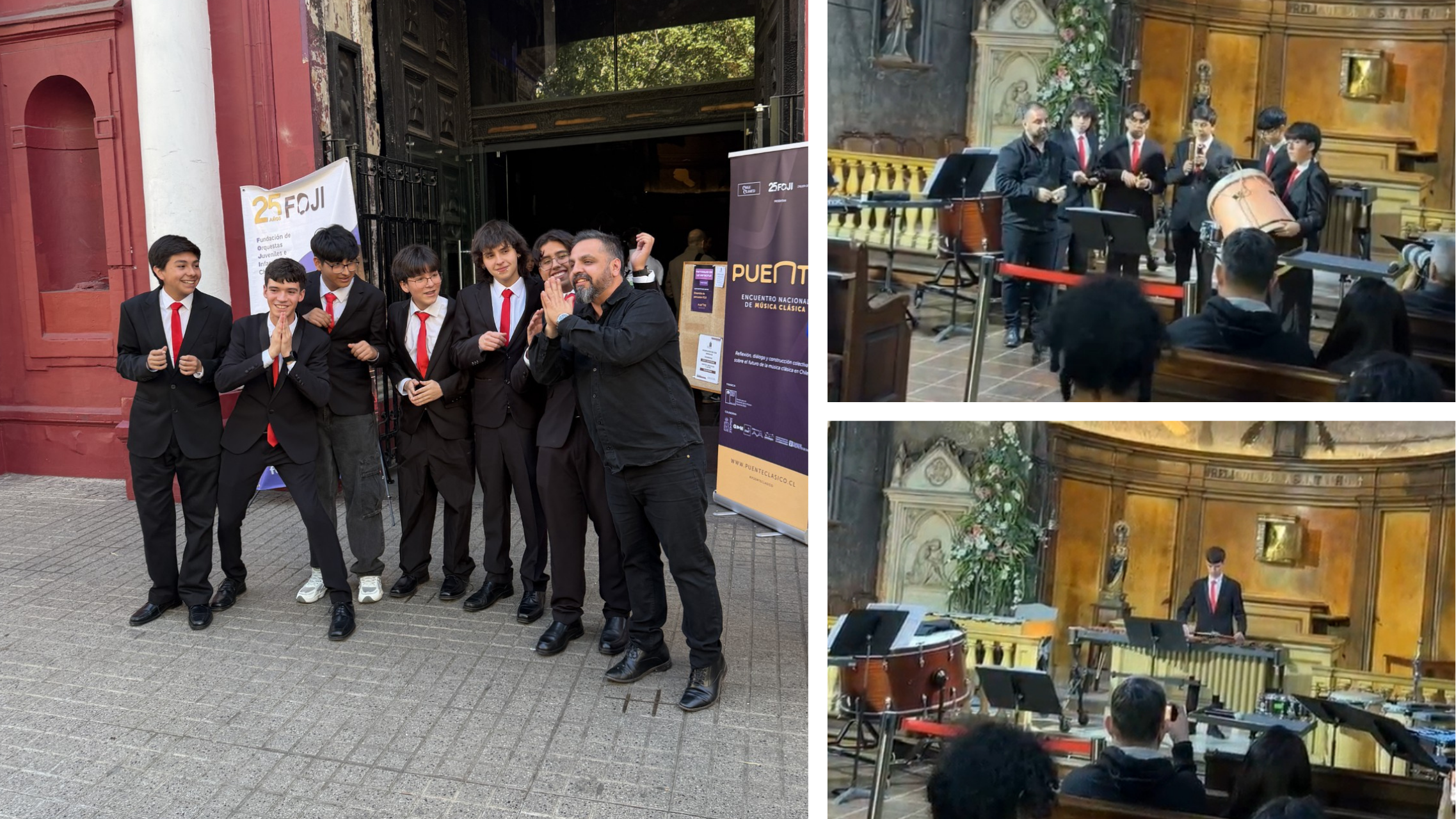

None of this
would have landed the way it did without the welcome I was
given. From the first networking reception on the CEAC terrace
to the closing concert at the historical
Veracruz
Parish with the outstanding
musicianship of FOJI, I was folded into this
community, and my wonderful
hosts Camila,
Gabriel,
and
Cristóbal
made sure of
that from the first
day.
This was carried through
my
time with their community, and
I left
Santiago having made friends and fellow colleagues for
life.
As I process my time with this amazing, generous and vibrant music community, the takeaways are already clear to me. PUENTE wasn't a lesson about Chile needing to become more like Australia. It was confirmation that the real question, how a sector builds something that outlasts any one person, government or funding cycle, is the same question everywhere people care enough to keep asking it. Chile is already further along than we were on day one. I'm looking forward to watching what they build, and the chance to keep comparing notes and supporting them as they create something that will work in service of their community.
© Australian Music Centre (2026) — Permission must be obtained from the AMC if you wish to reproduce this article either online or in print.




Comments
Be the first to share add your thoughts and opinions in response to this article.
You must login to post a comment.