4 December 2025
The Hidden Subsidy: Why Australian Art Music Commissioning Needs to Change
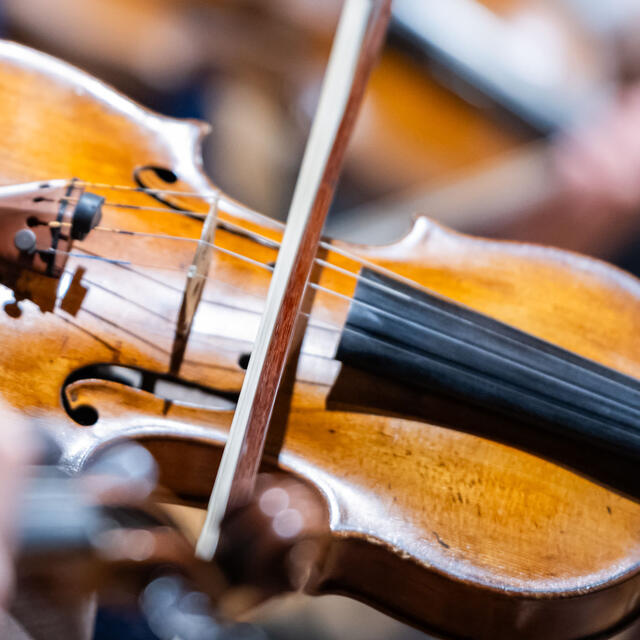 Image: MOMENTUM Plus, AMC, Trackdown Studios, 2025. Photography by New Point of View.
 When a composer accepts a commission for half what the work is worth, we call it "supporting the sector." When they work without a contract, we call it "keeping things simple". When emerging creators accept any rate offered because they fear losing the opportunity, we call it "building your catalogue."
It's time to call it what it really is: unsustainable.
Creative Australia's new research, Sound Fair? An analysis of art music commissioning in Australia, provides the first comprehensive data on commissioning practices since 2015. The findings are stark. Australian art music creators are paid less than half comparable international rates across almost all work types. Most creators (55%) earn $5,000 or less per year from commissions. And perhaps most troubling, 32% of commissions are completed without any contract at all.
These aren't just statistics. They represent a sector built on the systematic undervaluing of creative labour.
The Real Cost of "Flexibility"
I've spent four years leading the Australian Music Centre, working alongside some of the most talented composers and sound artists in the world. What strikes me most about this research is not that rates are low, we knew that, but why they remain low.
Sixty-one per cent of commissioners and 66% of creators have no regular method for calculating commission rates. We're essentially making it up as we go, commission by commission, with no reference points and no transparency. The 2012 Australia Council guidelines, our last major benchmark, are 13 years old and no longer referenced.
In the absence of standards, rates become personal negotiations where power determines outcomes. Creators, especially those early in their careers report feeling unable to negotiate, with rates typically set by commissioners and little room for discussion. One emerging composer captured it perfectly: "As an emerging composer, it feels like the commissioner is doing you a favour by supporting your career."
This approach places all financial risk on those least able to bear it.
The Work Behind the Work
Here's something the research reveals that is deeply concerning: 53% of commissions include the creation of instrumental parts within the base fee, with virtually no rate adjustment.
If you're not a musician, let me explain. Creating parts for an orchestral work isn't just printing pages - it's extracting individual instrumental lines from a full score, transposing them correctly, ensuring page turns make sense and sometimes creating simplified versions for different skill levels. For a 10-minute orchestral piece, this can be 20-30 hours of highly skilled work.
Internationally, parts creation is either charged separately (10-30% surcharge) or has detailed pricing structures. In Australia, it's just... expected. Along with attendance at rehearsals (41% of commissions), performances (38%), unlimited revisions (55%), and numerous other duties that go unnamed, unvalued, or simply assumed.
When we don't acknowledge and compensate this work, we're not being flexible or collegial. We're asking creators to subsidise our organisations, our projects, and our sector.
The Gender Gap
The data reveals something subtle but significant about gender. Average commission rates appear similar at $596 per minute for women and $585 for men. But looking deeper, the gap between what women feel they should have earned ("ideal rate") versus what they actually received is 66%. For men, it's 35%.
That's not a rounding error. It suggests women are doing significantly more work for the same fee, more revisions, more duties, more scope creep or feeling less empowered to negotiate boundaries. Combined with broader research showing women in music earn less, receive less airplay, and are underrepresented in leadership, commissioning clearly perpetuates existing inequities rather than addressing them.
Why Commissioners Need Standards Too
Before this sounds like an indictment of commissioners, let me be clear: 93% of commissioning organisations consider commissioning beneficial or necessary to their business and core activity, not peripheral. Yet many express wanting to pay fairly while being constrained by available funding.
Commissioners need standards as much as creators do......not to restrict them, but to help them advocate for adequate budgets, to know what's reasonable, to have something concrete when asked why commissioning costs what it does.
The absence of guidelines doesn't create freedom. It creates confusion, inefficiency, and the perpetuation of inadequate budgets because no one knows how to justify better ones.
What Happens Next
If you're a creator:
- Stop accepting "exposure" as payment.
- Talk to other creators about what you're paid. Transparency is the antidote to exploitation.
- Use contracts, even for friendly commissions as they protect everyone when things go wrong.
If you're a commissioner:
- Budget properly from the start and if you can't afford to commission fairly, you can't afford to commission.
- Be clear about scope. Unlimited revisions aren't "flexibility," they're unpaid labour.
- Advocate and use this new data to make the case for adequate commissioning budgets with others in our community.
If you're a funder or policy maker:
- Require fair commissioning rates as conditions of funding...we do this for occupational health and safety, and we can do it for fair pay.
- Support commissioning infrastructure, not just individual projects. The sector needs systems, not band-aids.
- Listen to the data. It's clear, commissioning is systematically undervalued, and we now have the evidence to prove it.
The Path Forward
Systems persist not because people are malicious, but because they're unchallenged. Low commissioning rates continue not because commissioners want to exploit creators, but because we've built an ecosystem where everyone rationalises unsustainable practices as necessary compromises.
The Sound Fair? findings give us something we haven't had before: comprehensive evidence. Australian rates are less than half international standards. Seventy-eight per cent of creators receive three or fewer commissions per year. The system is broken in specific, documentable, fixable ways.
We can't unsee this data. And I don't think we should want to.
The art music sector in Australia is extraordinary. Our composers are creating world-leading work, often with international recognition. Our organisations are innovative and committed. Our audiences are growing. In 2024, Australian classical music saw a 15% revenue increase and 8% attendance growth compared to 2023. We have a thriving sector that has built its success on the systematic undervaluation of its core creative workers.
We can do better. We must do better. And now we have the evidence to show us how.
The title of the research asks a question: Sound Fair? The data provides the answer. Now it's up to all of us to do something about it.
© Australian Music Centre (2025) — Permission must be obtained from the AMC if you wish to reproduce this article either online or in print.




Comments
Add your thoughts to other users' discussion of this article.
You must login to post a comment.
Composers in Academia Undercut Freelance Composers
by CS au on 13 December, 2025, 10:19pm
This is a really excellent summary of the poor performance of existing conditions in the art music sector.
This is not helped by the number of times I've been to round table discussions where the established composers (typically male) who have gained regular paid work in composition academies state that they are not concerned with selling their scores for their true value because they don't need the income.
Yet these recognised composers have been given tertiary teaching jobs and have the most bargaining power in the market who could be making a difference by working towards fair value for every composer in every way our music is rewarded.
Who would have thought?
by Philip Czaplowski on 16 December, 2025, 9:06pm
I've been composing music for more than 50 years, so it didn't need a costly survey to highlight the fact that "commissions" are often not paid. Because so many composers are desperate for recognition, they use the term "commissioned by" more than loosely. It says more about the sorry psychological state of would be composers.