11 June 2026
The music we hear is the music we love
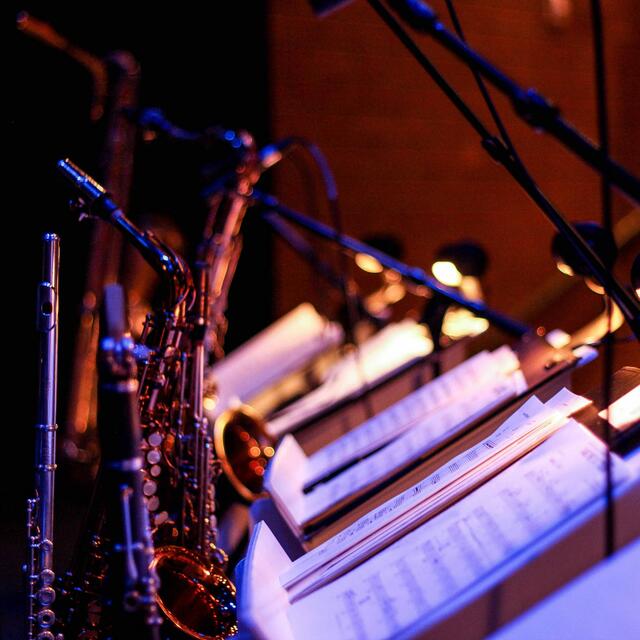 Image: Before the show
 © Lucas Alexander
Aboriginal and Torres Strait Islander audiences are advised that this article contains the name of a person who has died.
Last weekend, more than 187,000 Australians voted in the ABC Classic 100: Greatest of All Time. Beethoven's Symphony No. 9 took the top spot. The Planets came in at three. John Williams secured five entries.
And eight works by Australian composers made the list. Eight out of one hundred, in a vote shaped by what Australians themselves love, that number tells us something that's worth sitting with.
The annual countdown is a genuine celebration, and there is real cause for joy in what Australian creators achieved. Elena Kats-Chernin's Wild Swans at number 33. Nigel Westlake appearing twice, with Antarctica at 52 and Compassion at 54. Gurrumul's Djarimirri at 62. Ross Edwards, Peter Sculthorpe, and the remarkable collaborative work River by William Barton, Richard Tognetti and Piers Burbrook de Vere. Ron Grainer, who trained at the Sydney Conservatorium before giving the world the Doctor Who theme. These are extraordinary works and extraordinary artists.
But the question the list prompts me to ask is not whether Australian music is great. It clearly is. The question is: how do we ensure more people have the chance to discover that greatness?
There is a well-established relationship between exposure and love. We tend to love the music we hear. This is not a cynical observation; it is simply how human beings encounter art. Repeated listening builds familiarity. Familiarity builds affection. Affection, over time, becomes something that feels like a lifelong preference.
Look at the top of the ABC list. Beethoven's Symphony No. 9 has now won five times. It is a towering work, and its presence at number one is not surprising. But it is also one of the most performed, most recorded, most broadcast pieces of music in the world. It appears in films, in advertisements, at major sporting events, in school curricula across the globe. We have been hearing it our entire lives.
That sustained, layered exposure is not something Australian composers have historically enjoyed at the same scale. And that matters, not as an argument for quota or charity, but as a practical reality about how audiences are formed and how canons are built.
When we talk about exposure, we are really talking about an ecosystem. Radio programming. Concert programming. Education. Music media. Streaming algorithms. Film and television scores. Each of these is a point at which a piece of music can enter someone's life and take root.
At the AMC, we think about this ecosystem constantly. Representation in concert programs matters. The works taught in schools matter. The artists programmed at festivals matter. These are not abstract cultural policy questions, they have direct, measurable consequences for what ends up beloved by a broad public twenty or thirty years later.
When Nigel Westlake and Lior's Compassion entered the ABC Classic 100 in 2021 at number 93 and climbed to 54 this year, that trajectory tells a story. It is a story of a work finding its audience gradually, through performance, through broadcast, through word of mouth. It is a story of what is possible when Australian music gets into the world consistently and over time.
The eight Australian works in this year's countdown share something in common beyond nationality. They have all, in various ways, found sustained pathways to Australian ears. Wild Swans has been performed widely and its Eliza Aria entered mainstream consciousness through an international advertising campaign. The Sculthorpe and Edwards works have been championed by Australian orchestras for decades. Djarimirri arrived with significant media attention and critical celebration. River benefited from the platforms of its collaborators.
Exposure, in each case, preceded love.
This is not to diminish the works themselves. Greatness matters. But greatness alone does not guarantee discovery. A work cannot move an audience that has never heard it.
So, what does this mean for those of us working in and around Australian music?
It means that advocacy for Australian works in concert programs, in broadcast, in education and in commissioning is not just cultural policy work. It is, quite literally, the work of building the next generation of beloved Australian music.
It means that the AMC's role in championing, documenting and connecting Australian creators to opportunities is part of a longer, slower project of cultural formation. One that plays out not in a single season but across decades.
And it means that when we celebrate the works that made the ABC Classic 100, we should also be asking which works might be on that list in 2036 or 2046, and what we are doing now to give them the best possible chance.
Eight out of one hundred is a starting point, not a ceiling.
© Australian Music Centre (2026) — Permission must be obtained from the AMC if you wish to reproduce this article either online or in print.




Comments
Be the first to share add your thoughts and opinions in response to this article.
You must login to post a comment.